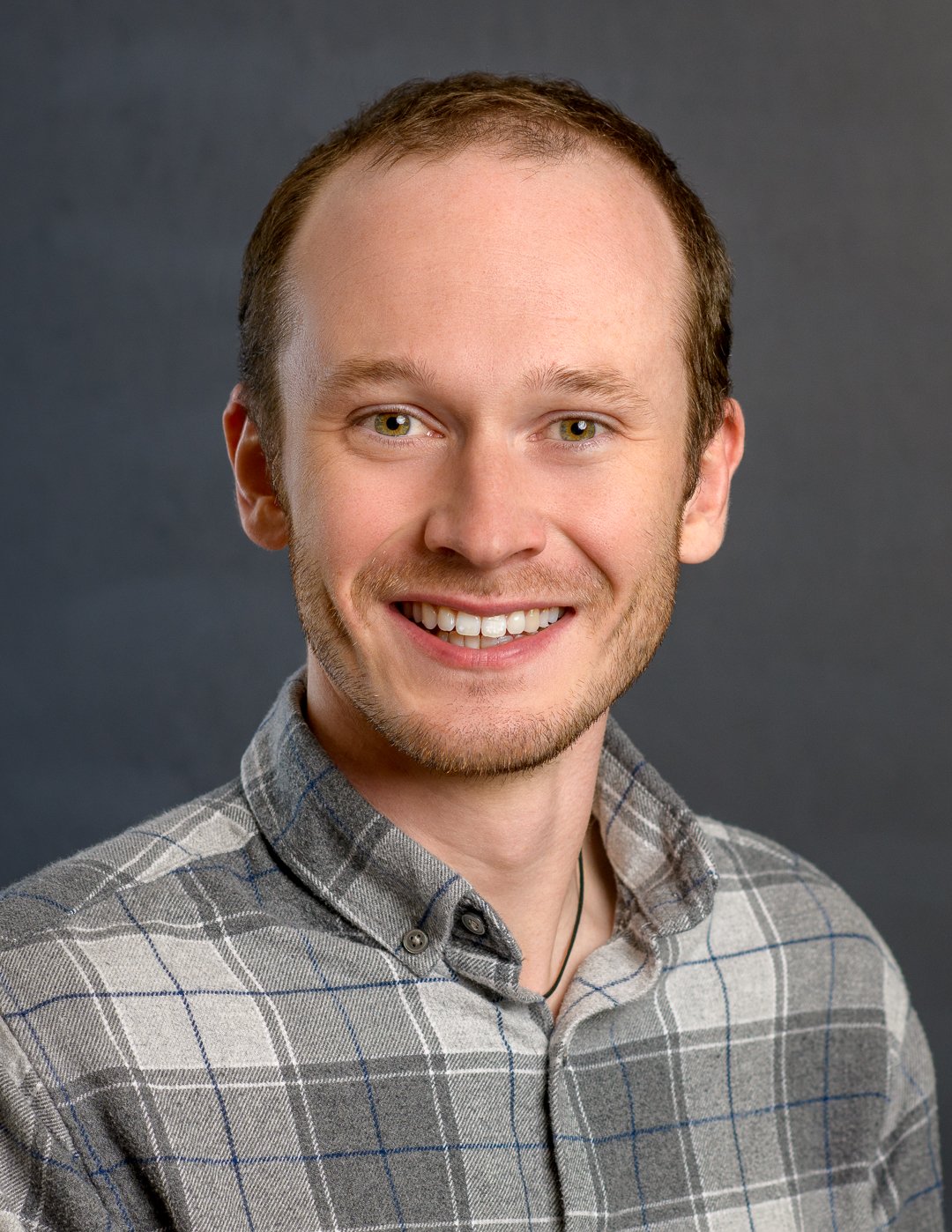
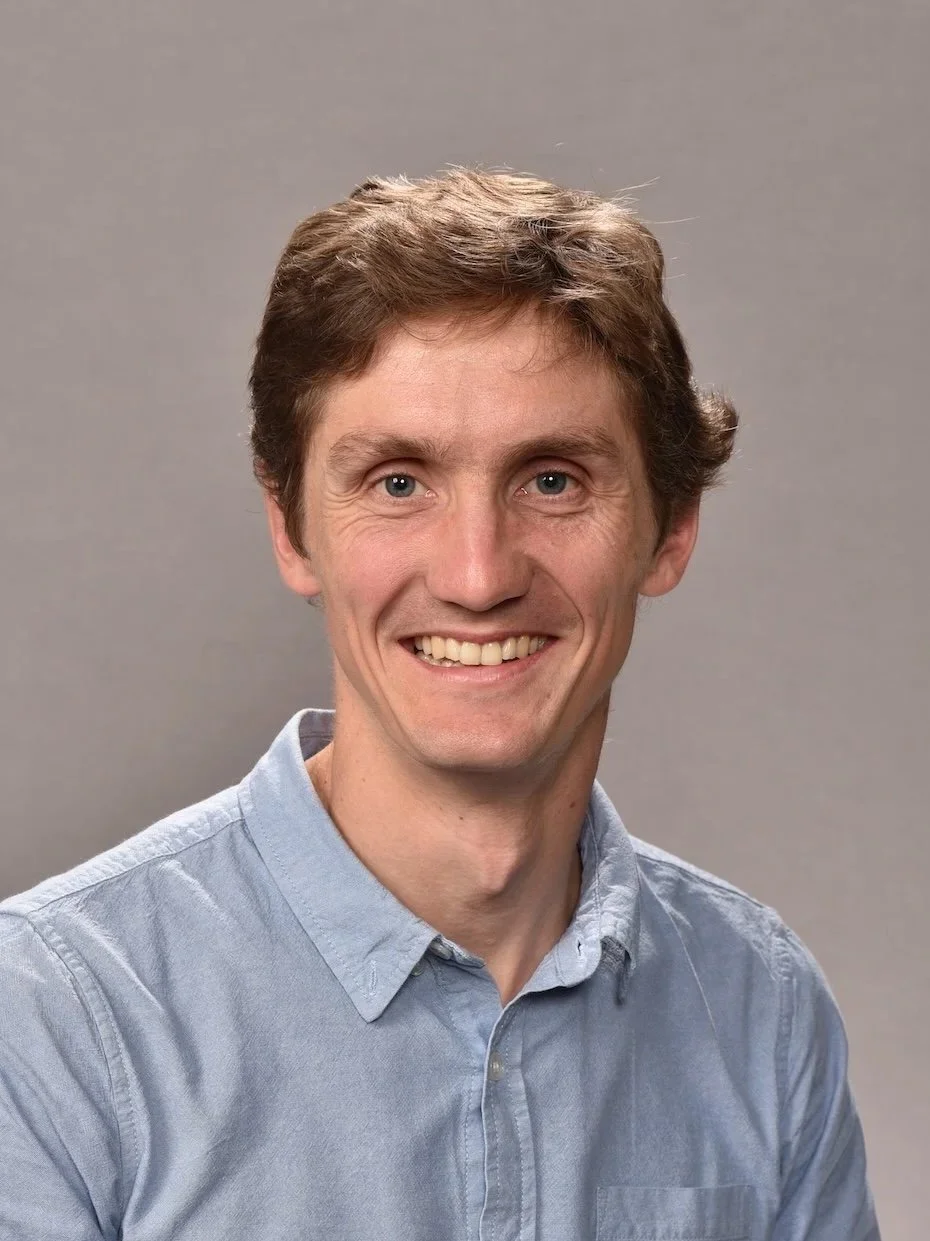
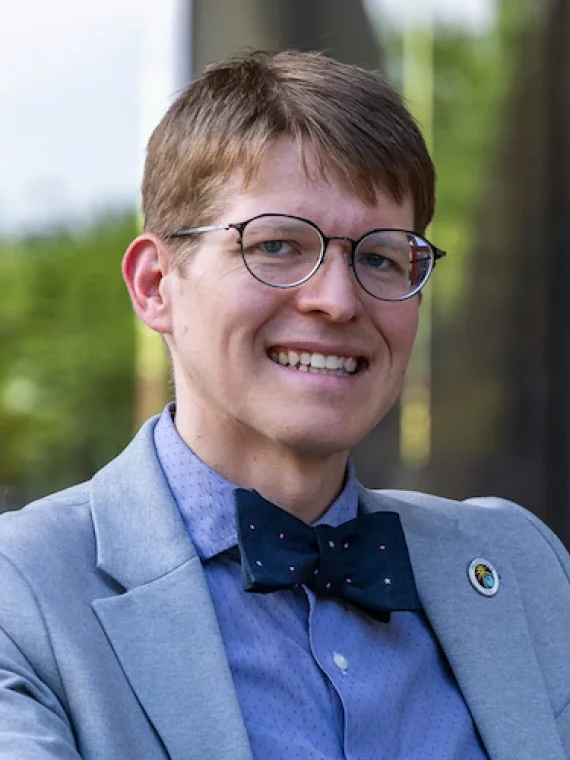


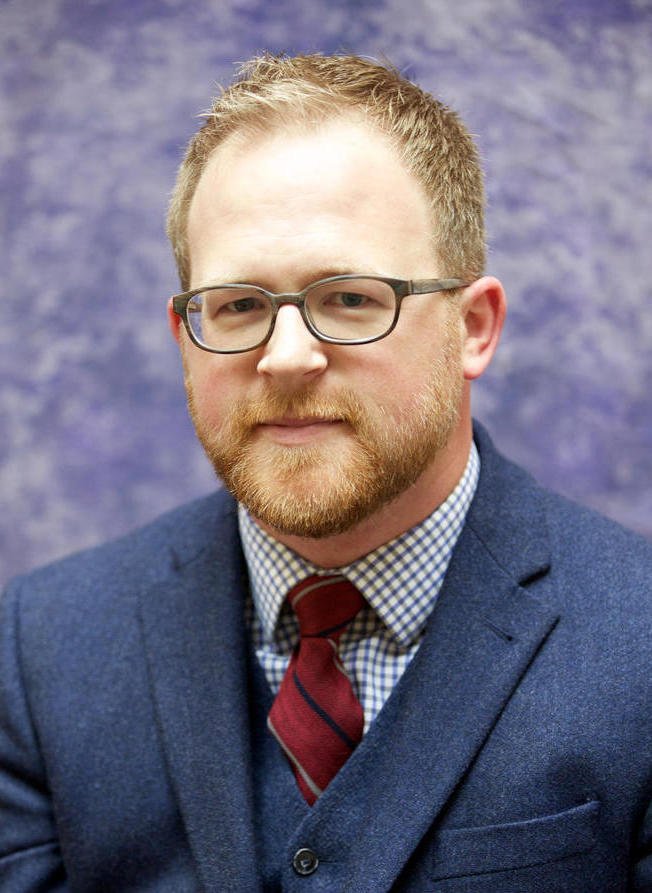

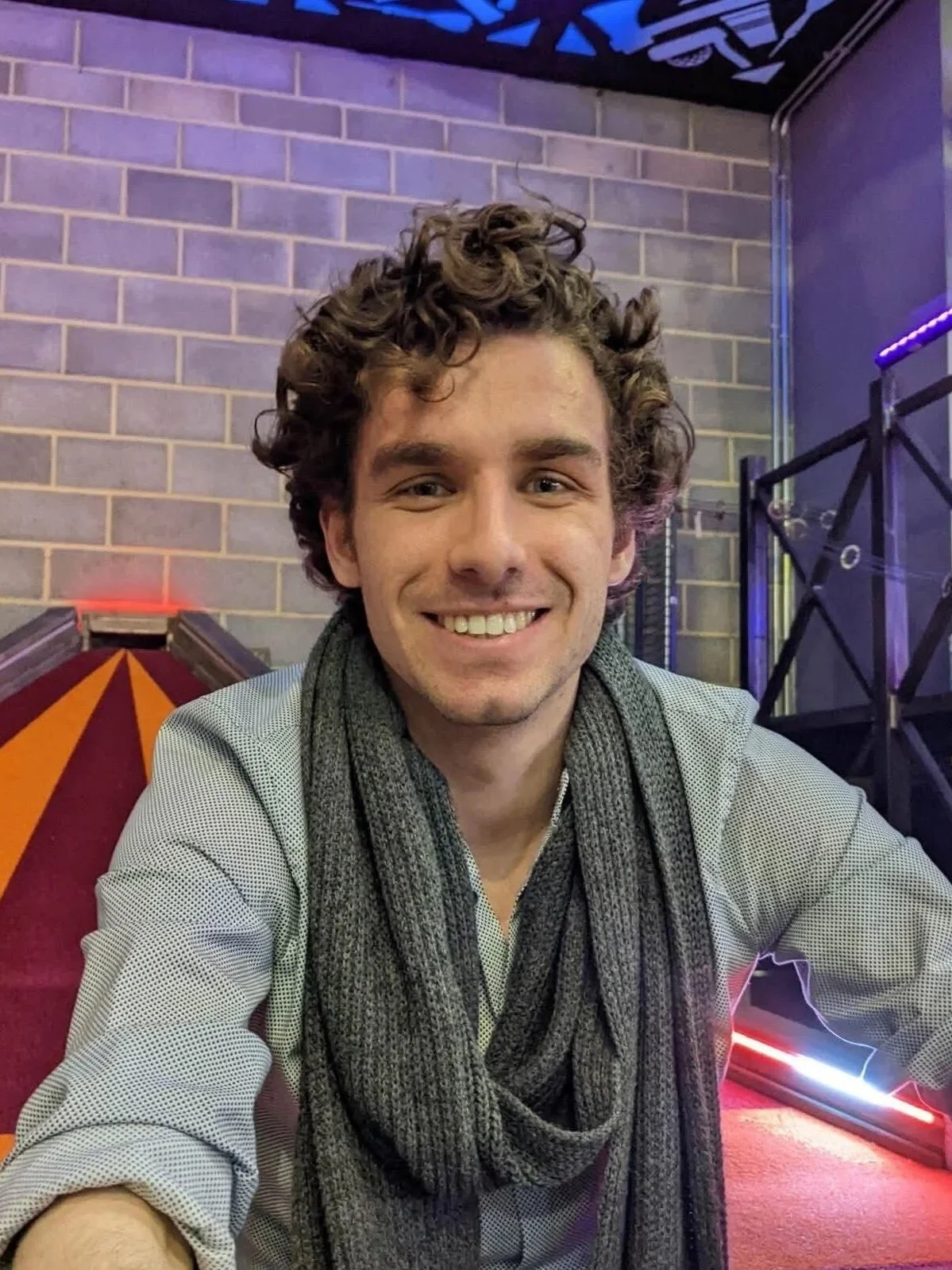
Callum Fairbairn is a Postdoctoral Member at the Institute for Advanced Study (IAS). Dr. Fairbairn employs a range of analytical techniques, coupled with targeted numerical simulations, to investigate the fundamental fluid dynamics of waves, instabilities, and distortions in astrophysical disks. Prior to his appointment at the IAS, he obtained his Master’s degree from the University of St Andrews (2018) and his PhD from the Department of Applied Mathematics and Theoretical Physics at the University of Cambridge (2023). His current research interests span from small-scale instabilities in warped disk flows to the complex magnetospheric accretion processes in protostellar systems.
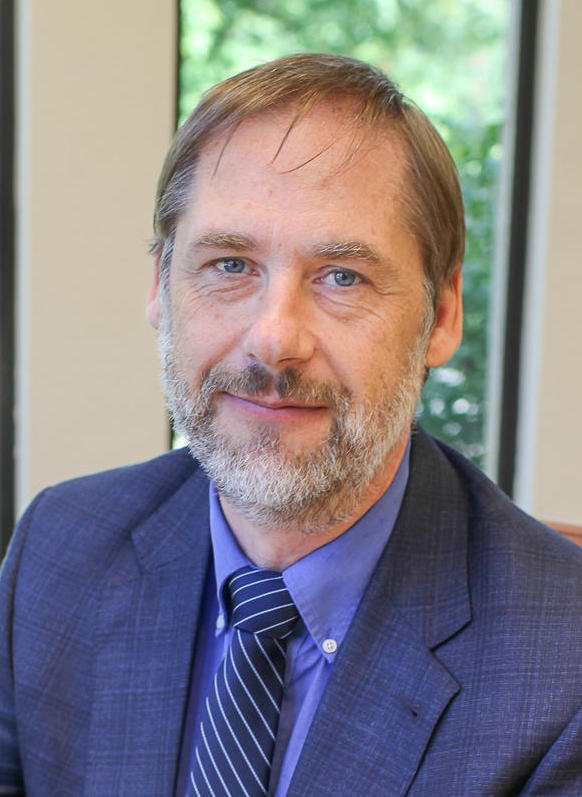
Charles Gammie is the Stanley O. Ikenberry Endowed Chair in Astronomy and in Physics at the University of Illinois at Urbana-Champaign, a Fellow of the American Physical Society, and a member of the American Academy of Arts and Sciences. Prof. Gammie is a theoretical astrophysicist who has contributed to our understanding of black holes, the origin of stars, planets, and moons, and the properties of turbulence in astrophysical plasmas. He has pioneered novel numerical methods for modeling astronomical objects, including those used to simulate and interpret the first images of black-hole accretion made by the Event Horizon Telescope collaboration, for which he co-chairs the collaboration's Science Board. Having received his Ph.D. in astrophysics from Princeton in 1992, Prof. Gammie has held postdoctoral fellowships at the University of Virginia and Harvard, and visiting positions at the Perimeter Institute, the Institute for Advanced Study, the Max Planck Institute for Astrophysics, the Flatiron Institute, and Oxford University.
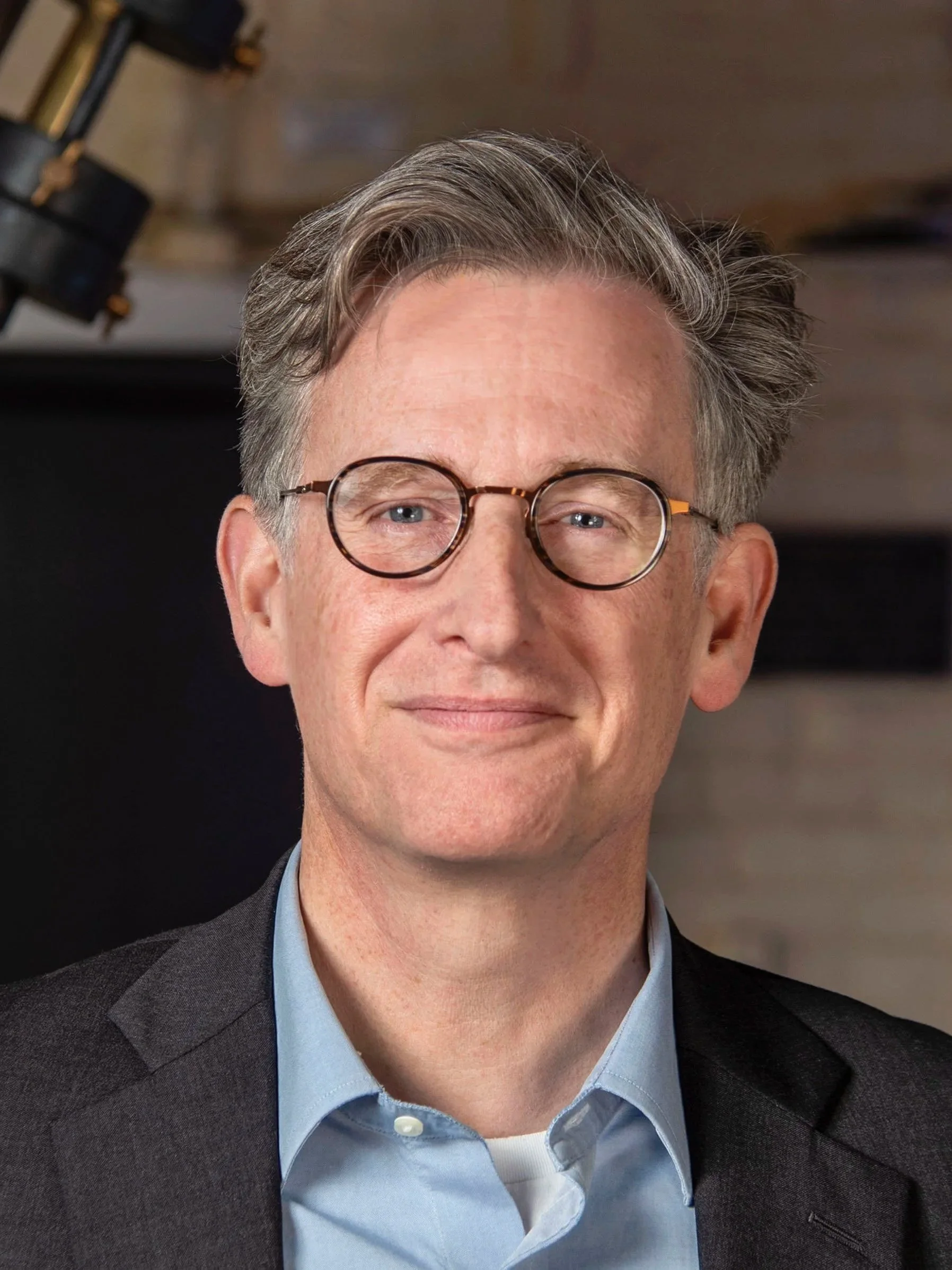
Jim Stone is a Professor in the School of Natural Sciences of the Institute for Advanced Study (IAS) in Princeton, NJ and an Emeritus Professor of Astrophysical Sciences at Princeton University, where he had served as Department Chair and Lyman Spitzer Jr. Professor of Theoretical Astrophysics from 2016 to 2019. After earning degrees from Queen’s University, Kingston and the University of Illinois at Urbana-Champaign, he joined the faculty of the Department of Astronomy at the University of Maryland, College Park in 1991. In 2002 he became Professor of Mathematical Physics (1978) at the University of Cambridge and then, in 2003, Professor in both the Department of Astrophysical Sciences and the Program in Applied and Computational Mathematics at Princeton University. Prof. Stone’s influence and leadership in the field of computational astrophysics has been recognized with numerous prizes and by memberships of the National Academy of Sciences and the American Academy of Arts and Sciences.
Jonathan Squire is an Associate Professor at the University of Otago, New Zealand and is Past-Chair of GPAP. Originally from Dunedin, New Zealand, where he studied physics and music, Prof. Squire earned his PhD in plasma physics from Princeton University in 2015, funded by a Fulbright Science and Technology fellowship. After 2.5 years as a Sherman Fairchild postdoctoral fellow at the Caltech astronomy department, he returned to New Zealand in 2018 as a Rutherford Discovery Research Fellow, joining the faculty at Otago in 2024. He is the recipient of the 2022 Thomas H. Stix Award from the American Physical Society. Prof. Squire studies a variety of topics in astrophysical plasma physics and fluid dynamics, namely, how basic dynamical processes (instabilities, turbulence, transport) affect astrophysical systems like the solar corona and wind, stars, galaxy clusters, accretion disks, planet formation, the interstellar medium, and cosmic rays.
Kristopher Klein is an Associate Professor at the University of Arizona in the Department of Planetary Sciences and at the Lunar and Planetary Laboratory. Prof. Klein studies fundamental plasma phenomena, with a particular focus on turbulence and dissipation in space and astrophysical systems. He received a BA in Physics and Mathematics from Luther College in 2008 and a PhD from the University of Iowa in 2013. In 2014, he worked at the University of New Hampshire as an NSF Atmospheric and Geospace Science Postdoctoral Research Fellow. In 2016, joined the Parker Solar Probe science team at the University of Michigan; he now serves as Deputy PI for the PSP/SWEAP instrument. After starting at the University of Arizona in 2018, he was part of a team awarded the 2022 APS Landau–Spitzer Award for theoretical developments of techniques to measure dissipation in collisionless plasmas. In 2024 he was awarded the AAS SPD Karen Harvey Award for contributions to our understanding of kinetic space plasma turbulence. Prof. Klein is Deputy PI for NASA’s HelioSwarm mission, which will probe the nature of multi-scale turbulence in the solar wind.
Lorenzo Sironi is an Associate Professor in the Department of Astronomy at Columbia University and a Research Scientist at the Center for Computational Astrophysics of the Flatiron Institute, where we works on a variety of plasma processes relevant to astronomy. He became passionate about astronomy in Pisa, before moving to the Department of Astrophysical Sciences at Princeton for his PhD, awarded in 2011. Afterwards he was a NASA Einstein Fellow at Harvard, moving to Columbia in 2016, where he has nurtured a thriving research group in high-energy plasma astrophysics. He was awarded a 2019 Sloan Fellowship in Physics, a 2020 Cottrell Scholar Award, and a 2023 Department of Energy Early Career Award. His research group investigates the plasma physics of shocks, magnetic reconnection, and turbulence in order to explain from first principles the observations of a wide variety of astrophysical sources, especially those whose extreme conditions cannot be currently probed in the laboratory.
Louise Willingale is an Associate Professor at the University of Michigan in the Electrical and Computer Engineering department and the Associate Director for the NSF ZEUS facility at the Gérard Mourou Center for Ultrafast Optical Science. Prof. Willingale researches experimental high-intensity laser-plasma interactions, with a focus on relativistic electron heating, ion acceleration, proton radiography, magnetic-field generation, and reconnection. She received her PhD in Plasma Physics from Imperial College, London in 2007. In 2008, she moved to the University of Michigan, first as a Postdoctoral Researcher, then as an Assistant Research Scientist, before becoming an Assistant Professor in 2014. In 2018, she received a Faculty Early Career Development (CAREER) Award from the NSF to study laser-driven magnetic reconnection. Prof. Willingale was elected Fellow of the APS in 2022 and Kavli Fellow in 2022.
Matthew Kunz is an Associate Professor and an Associated Chair in the Department of Astrophysical Sciences at Princeton University and Director of Graduate Studies for Princeton’s Program in Plasma Physics. Prof. Kunz uses analytical and numerical tools to investigate magnetic fields and multi-scale plasma dynamics in a wide variety of astrophysical systems, including galaxy clusters, black-hole accretion flows, the interstellar medium, molecular clouds, protostellar cores, protoplanetary disks, and the solar wind. He received degrees in Astronomy-Physics and Music from the University of Virginia in 2003 and a PhD in Physics from the University of Illinois at Urbana-Champaign in 2009. From 2009 to 2011, he worked as a postdoctoral research associate at the University of Oxford. Afterwards, he moved to Princeton as a NASA Einstein Fellow and Lyman Spitzer Jr. Fellow, joining the faculty there in 2015. In 2017 he received a Sloan Fellowship in Physics and, in 2020, a Faculty Early Career Development (CAREER) Award from the NSF.
Muni Zhou is an Assistant Professor in the Department of Physics at Dartmouth College. Prior to joining the faculty at Dartmouth, she was a Presidential Postdoctoral Research Fellow in the Department of Astrophysical Sciences at Princeton University and a Postdoctoral Member of the Institute for Advanced Study (IAS) in Princeton, NJ. Prof. Zhou uses a combination of analytical theory and numerical experiments to study plasma physics problems such as magnetogenesis, plasma dynamos, and kinetic turbulence. She earned her BSc in Physics from Zhejiang University in 2016 and her PhD in Nuclear Science and Engineering from MIT in 2022, where she was supported by a Future Investigators in NASA Earth and Space Science and Technology (FINESST) Fellowship. Currently, Prof. Zhou is investigating the generation and amplification of magnetic fields in collisionless plasmas, and energy dissipation in strongly magnetized kinetic turbulence.
Robert Ewart is a postdoctoral research associate in the Department of Astrophysical Sciences at Princeton University and a member of the Simons Collaboration on Extreme Electrodynamics of Compact Sources. Dr. Ewart uses a combination of analytical theory and numerical experiments to study the dynamics and statistical mechanics of collisionless plasmas and cosmic rays. He earned his Masters in Mathematical and Theoretical Physics in 2020 and his DPhil in Theoretical Physics in 2024, both from the University of Oxford. In 2025 Dr. Ewart received a PhD Research Award from the European Physical Society Plasma Physics Division for his fundamental work on the statistical mechanics of collisionless plasmas and the existence of universal phase-space equilibria.